 (Image source: Inuvo / DSR)
 There is something transformative about gripping the steering wheel on an open Italian road. Trains can whisk you between major city hubs with ease, but rail tracks cannot deliver the raw, spontaneous magic tucked away in the country's hidden corners. When you drive, you dictate the tempo. You decide when to pull over for an unscripted espresso in a quiet piazza or pause on a cliff edge just to watch the sun dip into the sea.
Exploring Italy by car is all about rhythm. If you rush from point to point just to check off monuments, you miss the entire point of the journey. The real charm hides between the destinations. It lives in the unexpected farm stands, the quiet switchbacks, and the sudden panoramic views that appear around every bend.
The Amalfi Coast and Sheer Coastal Drama
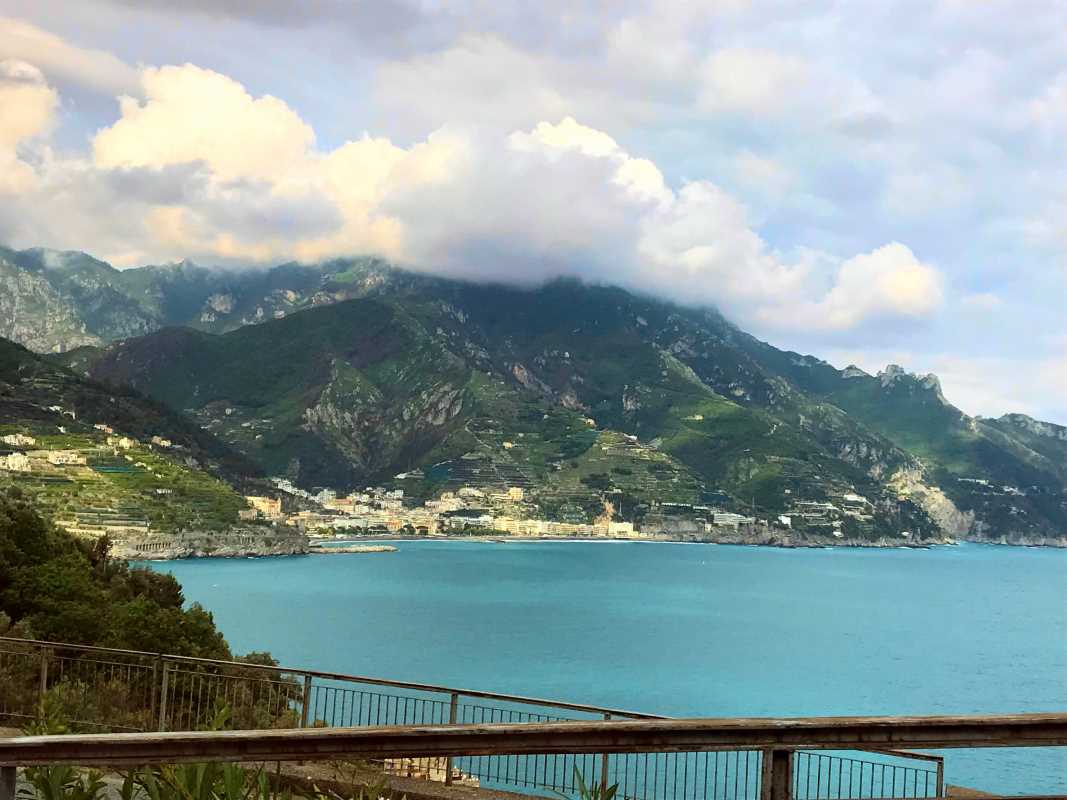
Driving the famous Strada Statale 163, known simply as the Amalfi Drive, feels like piloting a car along the edge of the world. Carved directly into vertical cliffs between Vietri sul Mare and Sorrento, this roughly 50-kilometer stretch hugs the Tyrrhenian Sea with relentless twists and dizzying drop-offs.¹
Every turn reveals another postcard view. Pastel villas cling to sheer rock faces in Positano, while the hidden sea gorge at the Furore Fjord reveals a tiny beach tucked beneath a towering stone bridge. Higher up the mountain, a quick detour along the SP1 leads to Ravello, where you can walk through the cliffside gardens of Villa Rufolo and look out over the entire Gulf of Salerno.
Navigating this ribbon of asphalt takes focus and a calm head. The road is narrow, local bus drivers are fearless with their horns, and summer traffic can crawl. To save yourself headaches, keep these needed tips in mind
• Direction matters: Drive from west to east (Positano toward Salerno) if your passenger wants uninterrupted water views straight out their window. Drive east to west if you prefer having the solid rock wall right next to your lane.
• Watch the plate rules: During peak months, the Amalfi Coast uses an alternating license plate system (targhe alterne) to cut down traffic.² On odd dates, cars with odd-ending license plates are restricted during the day, and the same applies to even numbers on even dates.
• Choose off-peak hours: Head out before 8:30 AM or late in the afternoon. You get softer light for photos and far fewer massive tour buses blocking the tightest corners.
The Great Dolomites Road and Alpine Splendor
If you swap sea level for jagged limestone peaks, the Great Dolomite Road (Grande Strada delle Dolomiti, or SS48) delivers some of the most dramatic mountain scenery in Europe. Running roughly 110 kilometers from Bolzano to Cortina d’Ampezzo, this drive cuts straight through the heart of northern Italy's UNESCO-protected alpine space.³
Your journey begins with a gentle climb out of the Adige valley, quickly passing the emerald-green waters of Lago di Carezza with the Latemar massif reflecting off its surface. From there, the road ascends through high-altitude wonderlands, crossing Passo di Costalunga and reaching Passo Pordoi at 2,239 meters.
The contrast here is striking. Below the treeline, you cruise past quiet meadows and wooden chalets, but as you climb higher, the greenery gives way to sheer pale rock towers that turn pink at sunset. A short detour south onto the SP638 brings you up to Passo Giau, where you get an open 360-degree view of jagged peaks that feels entirely wild. Plan to spend at least two full days on this route so you can hike, take cable cars to panoramic ridges, and sample hearty South Tyrolean food along the way.
Tuscany and the Rolling Val d’Orcia
Tuscany offers a completely different rhythm. Here, the drama comes from gentle golden light, orderly vineyard rows, and roads flanked by towering Italian cypress trees.
Focus your trip around the Val d’Orcia loop south of Siena along the SP146 and SP88. This is the classic rural space you see on art prints and magazine covers. Stop in Pienza to taste wheels of aged pecorino cheese, then take the winding gravel roads that lead down toward the tiny, solitary stone chapel of Keyeta.
A Tuscan drive rewards anyone willing to slow down. The secret is treating driving as a leisure activity rather than a way to get somewhere fast
• Cruise the Chiantigiana: Connect Florence and Siena via the SR222 highway to glide past world-class wineries, historic stone castles, and quiet olive groves.
• Respect unpaved paths: The famous strade bianche (white gravel roads) are wonderful for photos, but they turn slippery and rutted during heavy rain.
• Avoid historic centers: Keep an eye out for white signs with red circles marking Zona a Traffico Limitato (ZTL). Wandering into these historic city centers without a permit triggers automatic camera fines.
Stelvio Pass and the King of Alpine Hairpins
For pure driving excitement, nothing in Italy matches the legendary Passo dello Stelvio (SS38). Connecting Prato allo Stelvio in the northeast to Bormio in Lombardy, this mountain pass climbs to 2,757 meters, making it the highest paved pass in the country.
The northeastern ascent is famous for its 48 numbered hairpin turns (tornanti). Looking up from the valley floor, the road resembles a giant ribbon folded back and forth against the wall of the Ortler Alps.
Driving Stelvio requires total concentration. You need to pick your lines carefully, yield to cyclists grinding up the incline, and shift into low gears to let engine braking save your brake pads on the way down. The pass stays open only from late spring to late autumn, usually closing once the first winter snow hits in late October. Tackle it on a crisp Tuesday or Wednesday morning to skip the heavy weekend traffic and experience one of the greatest engineering feats in the automotive world.
Practical Tips and Planning Your Route
A great Italian road trip balances careful preparation with the freedom to get lost. Keep these simple rules in mind before you turn the ignition
• Rent a compact car: Tiny streets, tight mountain switchbacks, and narrow parking spots make small hatchbacks far easier to handle than full-size SUVs.
• Carry an International Driving Permit: If your driver's license was issued outside the European Union, Italian law requires you to carry an official permit alongside your home license.
• Know the toll system: On the Autostrada highway network, avoid the yellow Telepass lanes at toll plazas unless your rental car includes a pre-installed toll transponder. Stick to the blue lanes for credit cards or white lanes for cash.
Give yourself permission to ignore the navigation map every once in a while. Take that random side exit, stop at the family-run trattoria with handwritten menus, and let the beauty of the Italian space set the pace of your journey.
Sources:
1. The Road Reel
https://www.theroadreel.com/best-road-trip-in-italy-routes/
2. Amalfi Coast Rental Support
https://www.amalficoastrentalsupport.com/traffic-regulation-amalfi-coast
3. Experto Italy
https://expertoitaly.com/scenic-roads-the-italian-wonders-that-make-driving-an-immense-pleasure/