Have you ever sat on your couch watching the Oscars or Grammys and wondered how everything looks so polished? You see a massive star glide onto a stage, a live orchestra hit every cue, and a surprise winner get handed an envelope in seconds flat. It seems like effortless Hollywood magic.
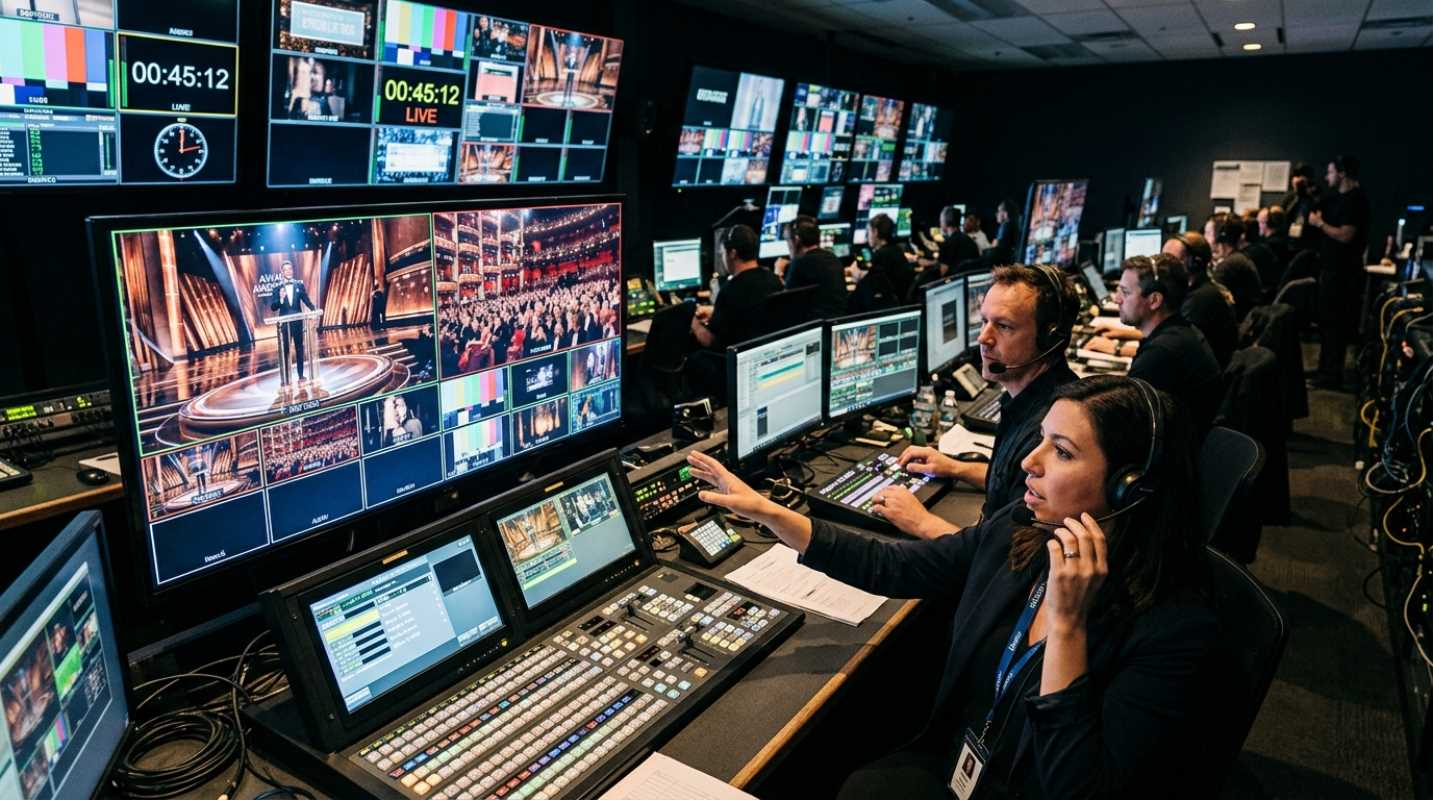
In reality, it is a high-wire technical marathon run by hundreds of showrunners, audio crews, and security teams working behind the curtains. A major live broadcast operates on a strict zero-second-takes policy. If a microphone drops out or a motorized set piece gets jammed, tens of millions of viewers across the globe see it happen live.
The Master Blueprint Planning the Impossible
Putting together a show of this scale takes somewhere between 10 and 12 months of non-stop planning. Executive producers like Raj Kapoor and Katy Mullan spend nearly a full year mapping out every single detail before the cameras turn on.¹ They do not just think about who is presenting or performing. They plan how to transform massive venues like LA's Dolby Theatre or Crypto.com Arena into high-tech television studios.
Transforming these arenas is an impressive engineering task. Crews spend about 30 days loading in gear, building custom stages, and testing equipment before airtime. Here is what goes into the physical build
• Stage Automation: Custom set builders engineer motorized stages that shift heavy scenic elements in and out of view during brief three-minute commercial breaks.²
• Massive Wiring: The Oscars setup deploys over 18 miles of power and data cables routed throughout the building.
• Lighting Grids: Technical crews hang roughly 1,500 lighting instruments from the rafters to create distinct visual looks for every segment.
• Red Carpet Logistics: Crews spend over 600 labor hours laying down 3,000 feet of custom red carpet, while 160 traffic managers route hundreds of arriving limos to holding spots at the Hollywood Bowl.
The Selection Process Who Decides Who Wins
Although stage crews build the set, another high-stakes operation runs quietly in the background. Who actually decides who walks home with a trophy?
It starts with thousands of industry professionals casting secret digital ballots. The Recording Academy handles the Grammys, while the Academy of Motion Picture Arts and Sciences manages the Oscars. Specialized peer voting committees review submissions, constantly balancing artistic merit with popular appeal.
To keep the results completely secret until the live broadcast, independent accounting firms step in. PwC oversees the Oscars, while Deloitte handles the Grammys. Only two audit partners know the actual winners before the envelopes open on stage.
The security surrounding those envelopes sounds like something out of a spy movie
1. Ballots are tallied electronically and then audited by hand inside secure facilities.
2. Workers print two identical sets of winner cards and lock them into custom briefcases.
3. On show day, two lead partners travel to the venue taking separate, secret driving routes.
4. Police escorts guide each auditor directly to opposite sides of the stage wings.
If one auditor gets delayed in heavy traffic, the secondary briefcase is already backstage ready to go.
The Art of the Broadcast From Script to Screen
Writing a live award show is a continuous balancing act. Writers create jokes and monologues months in advance, constantly tweaking their material right up until airtime. They have to tease famous celebrities without making the broadcast feel cruel or mean.
The technical execution backstage is even more demanding. Sound engineers consider the Grammys the most complex live audio production on television. To pull off up to 20 live musical performances in a single broadcast, sound teams rely on specialized stage setups
• Double Stage Rotations: Crews build an artist's entire backline, drum kit, and amplifiers on a parallel stage or behind an acoustic wall while another act performs live.
• Frequency Coordination: Technicians monitor over 200 wireless microphones and in-ear monitors simultaneously to prevent radio frequency interference in downtown Los Angeles.
• Mobile Audio Trucks: Audio engineers sit in dual mobile recording trucks outside the arena, using 48-fader mixing consoles to process independent live sound feeds.³
What happens when an acceptance speech runs way over its allotted time? Stage managers give the signal, and the orchestra conductor starts up the play-off music. It is a polite but direct way of telling a winner that their 45 seconds are up.
Unscripted Magic Memorable Behind-the-Scenes Moments
No matter how much you prepare, live television always brings unscripted chaos. That unpredictability is exactly why millions of people tune in.
Behind the scenes, floor managers work constantly to keep the audience looking packed and active. If a nominee steps away from their chair to grab a drink or head to the restroom, camera operators cannot show an empty seat on air.
That is where seat fillers come into play
• Casting: Professional casting agencies recruit hundreds of vetted seat fillers who pass background checks.
• Dress Code: Fillers must wear formal, dark clothing that blends into the background.
• Strict Rules: Fillers sign non-disclosure agreements and cannot speak to celebrities, ask for autographs, or look into camera lenses.
• The Swap: When a star stands up, floor managers quickly move a seat filler into the vacant chair. When the celebrity returns, the filler quietly slips away into the aisle during the next commercial break.
Backstage in the green room, nervous nominees mingle while waiting for their category. When a surprise win or crazy moment happens on stage, social media teams track online reactions immediately. If a moment goes viral, directors adjust their planned camera cuts to capture audience reactions in real time.
The Future of Award Shows in a Streaming World
As viewing habits shift away from traditional cable, award shows are adapting their production style. Executive producers are designing broadcasts for a digital-first audience that expects faster pacing and bite-sized clips.
Shows are adding shorter acceptance windows, interactive online polls, and dedicated backstage streaming feeds. Producers are moving away from dry category lists and leaning into personal storytelling that helps viewers connect with their favorite artists.
Even with changing broadcast tech, live award shows hold a special place in entertainment culture. They remain one of the few places where millions of people gather online to watch unscripted history happen together in real time.
Sources:
1. Executive Producers Raj Kapoor and Katy Mullan Interview
https://awardsradar.com/2025/05/07/interview-executive-producers-raj-kapoor-katy-mullan-are-oscar-nerds-just-like-you/
2. Broadcast Award Technical Production Details
https://rockforce.com/industries/broadcast-awards
3. Grammys Behind the Scenes Production Overview
https://www.forbes.com/sites/hughmcintyre/2023/01/30/grammys-producer-raj-kapoor-gives-a-peek-behind-the-scenes-into-musics-biggest-night/