Have you ever caught yourself staying up past midnight to finish just one more episode of a murder docuseries? You are definitely not alone. A staggering 84% of Americans aged 13 and older, roughly 230 million people, regularly tune into true crime content across streaming video, podcasts, and social media.¹
So why are we so captivated by the darkest corners of human behavior? Psychologists often describe this fascination as a form of vicarious survivalism. Watching or listening to real-life horror stories lets us test our emotional limits from the safety of our living rooms. It acts like a mental drill for worst-case scenarios, letting us ask ourselves what we would do if we found ourselves in danger.
Over the last few years, giant streaming platforms and podcast networks turned what used to be a niche late-night TV fascination into mainstream culture. But as the genre grows faster than ever, it brings up an important question. Where is the line between valid public interest and pure exploitation?
Tracing the Evolution of True Crime Documentaries
If you look back a couple of decades, true crime television mostly consisted of sensationalized reenactments with bad lighting and melodramatic voiceovers. Today, the genre looks radically different. High-budget multi-part docuseries have replaced cheap network specials, giving directors the space to build narrative tension and examine cases from every angle. On major streaming platforms, subscribers spend over four hours a month watching documentaries, with true crime titles consistently dominating top-ten charts.³
This shift to limited series changed how producers pace their stories. Instead of rushing through an entire investigation in forty minutes, filmmakers spend six to eight hours examining forensic evidence, police interrogations, and trial transcripts.
Modern documentaries also heavily feature digital evidence and crowdsourced sleuthing. Viewers do not just watch a story unfold anymore. They see online communities analyze phone location data, scan social media archives, and spot details that law enforcement originally missed. This level of access transforms passive viewers into active participants in the mystery.
The Golden Age of Audio True Crime Podcasts
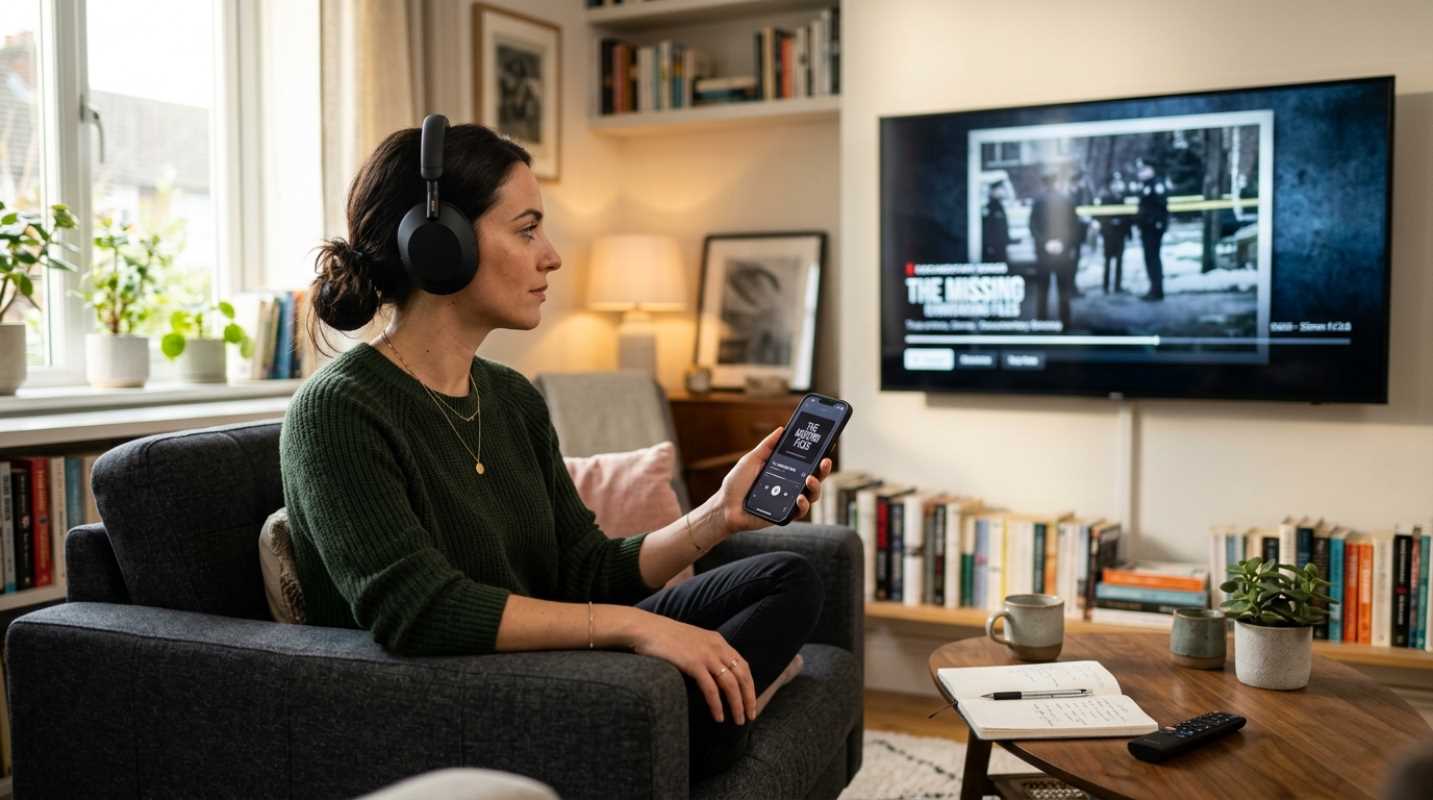
Although video streaming gets a lot of attention, audio is where the true crime community feels most personal. Roughly 42% of Americans regularly listen to true crime podcasts, making it the third most popular audio genre in the country. If you listen to these shows, you probably know how easy it is to get hooked. In fact, over 89% of weekly true crime listeners report binge-listening to multi-part series in long sessions.
The intimacy of the audio format is a big reason for this massive popularity. Headphones create a direct, personal connection between host and listener. Women, who make up anywhere from 56% to 73% of the podcast audience, often connect with these stories as cautionary tales or calls for justice.
Podcasts have also become primary drivers for re-examining cold cases. Audio creators are stepping into roles traditionally held by investigative reporters, bringing fresh attention to forgotten crimes.
Top Recommendations for True Crime Listeners
Here are a few real-world examples where audio storytelling directly impacted the justice system
• Your Own Backyard: Creator Chris Lambert uncovered important evidence in the 1996 disappearance of Kristin Smart, directly contributing to an arrest and conviction decades later.
• In the Dark: Investigative reporting on jury selection bias in this series was so thorough that it helped overturn a conviction at the U.S. Supreme Court.
• Voices for Justice: Host Sarah Turney used her platform to rally public pressure, leading to an arrest in her own sister's cold case.
The Dark Side and Ethical Considerations in Storytelling
With massive popularity comes serious ethical responsibility. The rapid commercialization of real human tragedy has sparked heated debates over where entertainment ends and exploitation begins. When a crime gets turned into a glossy Hollywood drama or a snappy podcast, actual victims and their families often pay the price.
Research conducted by media scholars Dr. Kelli S. Boling and Dr. Danielle Slakoff shows that co-victims, the surviving family members and friends of crime victims, frequently face intense emotional strain when media companies adapt their stories.² Their research highlights several persistent problems
• Non-consensual stories: Families are often blindsided by major productions, learning about a series only when a trailer drops online.
• Factual inaccuracies: Speeding through production can lead to sloppy mistakes that damage public perception of the case.
• Loss of privacy: Relatives find their personal grief turned into fodder for public comment sections.
• Audience harassment: Overeager internet sleuths sometimes contact, accuse, or harass grieving family members.
High-profile dramatizations have faced intense pushback from real families who reported being re-traumatized without consent or consultation. When tragic events are packaged purely for entertainment, it treats real pain like a plot point.
Where True Crime Media Goes From Here
The genre is reaching a turning point. Audiences are growing more aware of tasteless content, turning away from comedic murder shows and demanding ethical standards instead. Organizations like the National Center for Victims of Crime now publish guidelines encouraging creators to get explicit consent, avoid victim-blaming, and offer trauma-informed interviews.
Many creators are leading this change by focusing directly on advocacy. Shows now routinely share ad revenue with missing persons funds or donate directly to cold-case DNA testing groups like Othram. Producers are recognizing that storytelling carries real weight in the physical world.
True crime is not going away anytime soon, but its focus is shifting. As audiences demand more respect for victims and greater accountability from creators, the future of the genre belongs to stories that seek actual justice rather than simple thrills.
Sources:
1. True Crime Consumer Report
https://ssrs.com/true-crime-consumer-report/
2. UNL Research on True Crime Media
https://news.unl.edu/article/research-examines-the-good-bad-and-ugly-of-true-crime-media
3. Digital-i True Crime Documentary Insight
https://www.digital-i.com/insight-articles/how-true-crime-is-fuelling-the-documentary-boom