 (Image via
Have you ever stood in a place so wild that the modern world just fades away? South America has that effect on people. It holds some of the planet's wildest geography, stretching from wind-sculpted southern ice fields to steamy equatorial canopies.
If you love the outdoors, this continent is pure magic. It packs unmatched biodiversity, rare wildlife, and dramatic terrain into vast protected territories. Let's look at the absolute best national parks you need to put on your radar right now.
Why South America is the Ultimate Wild Frontier
South America stands apart because its ecosystems remain massive, interconnected, and raw. You can hike across glaciers in the morning and watch condors ride thermal winds over jagged peaks in the afternoon. Travel a few hours north, and you are surrounded by tropical rainforests where new plant and animal species are identified every year.
What makes exploring here so rewarding is the balance of pure wilderness and growing accessibility. Park authorities and local communities work together to protect these habitats while building sustainable trail networks, comfortable eco-lodges, and regulated guided tours. Whether you want to trek for a week with a heavy backpack or take easy day walks from a cozy basecamp, the options are wide open.
Torres del Paine in Chile and the Patagonian Wilderness
Down at the southern tip of the continent, Torres del Paine National Park delivers raw wilderness at its best. Its famous granite spires shoot straight up into the Patagonian sky, flanked by electric-blue glacial lakes, winding rivers, and rolling golden plains.
The weather here can throw four seasons at you in twenty minutes. You might start your morning hiking under clear sunshine and find yourself battling fifty-mile-per-hour gusts by midday. That unpredictability is part of the thrill.
Whether you want an easy day trip or an intense backcountry challenge, the park accommodates everyone
• The W Trek: This classic four to five-day route takes you through the French Valley, right up to the base of the granite towers, and along the edge of the Grey Glacier.¹
• The O Circuit: A seven to nine-day loop for seasoned hikers that circles the entire Paine massif, offering quiet trails and remote views.
• Wildlife Spotting: Keep your eyes peeled for guanacos grazing on the steppe, Andean condors circling overhead, and the highest concentration of pumas in the Americas.
Make sure you book your campsites or mountain refugios three to six months in advance. Spots fill up fast, especially during the peak summer months between December and February.
Galápagos National Park in Ecuador, a Living Laboratory
About six hundred miles off Ecuador's coast sits Galápagos National Park, covering roughly 97 percent of the famous volcanic archipelago. It is a real-world biology classroom where animals never developed an instinctive fear of humans.
You will share rocky shorelines with marine iguanas that sneeze salt water, swim alongside sea lions, and watch giant tortoises graze in lush volcanic highlands. Birdwatchers can spot blue-footed boobies doing courtship dances and flightless cormorants drying their stunted wings on black lava rock.
Visiting this fragile environment comes with strict rules designed to protect it
• Entry Fee: Foreign adult visitors pay a 200 USD park entrance fee upon arrival at Baltra or San Cristóbal airports.²
• Transit Control Card: You will need to purchase a 20 USD card before boarding your flight from mainland Ecuador.
• Licensed Guides: You must explore visitor sites in the company of an official naturalist guide to keep trails pristine and wildlife undisturbed.
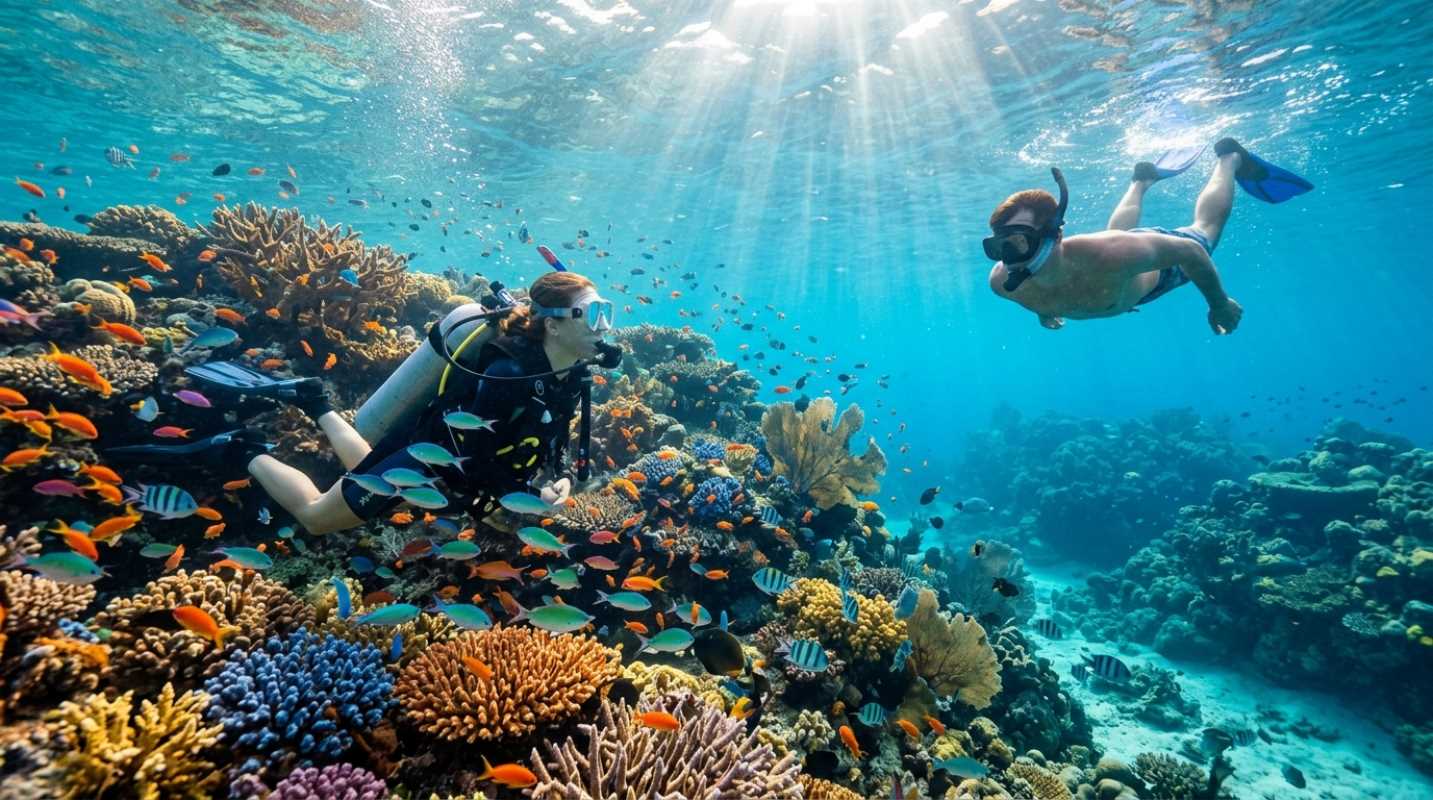
Take your time snorkeling in the marine reserve. Swimming next to green sea turtles and harmless reef sharks in crystal-clear water is an encounter you will never forget.
Iguazú National Park on the Border of Argentina and Brazil
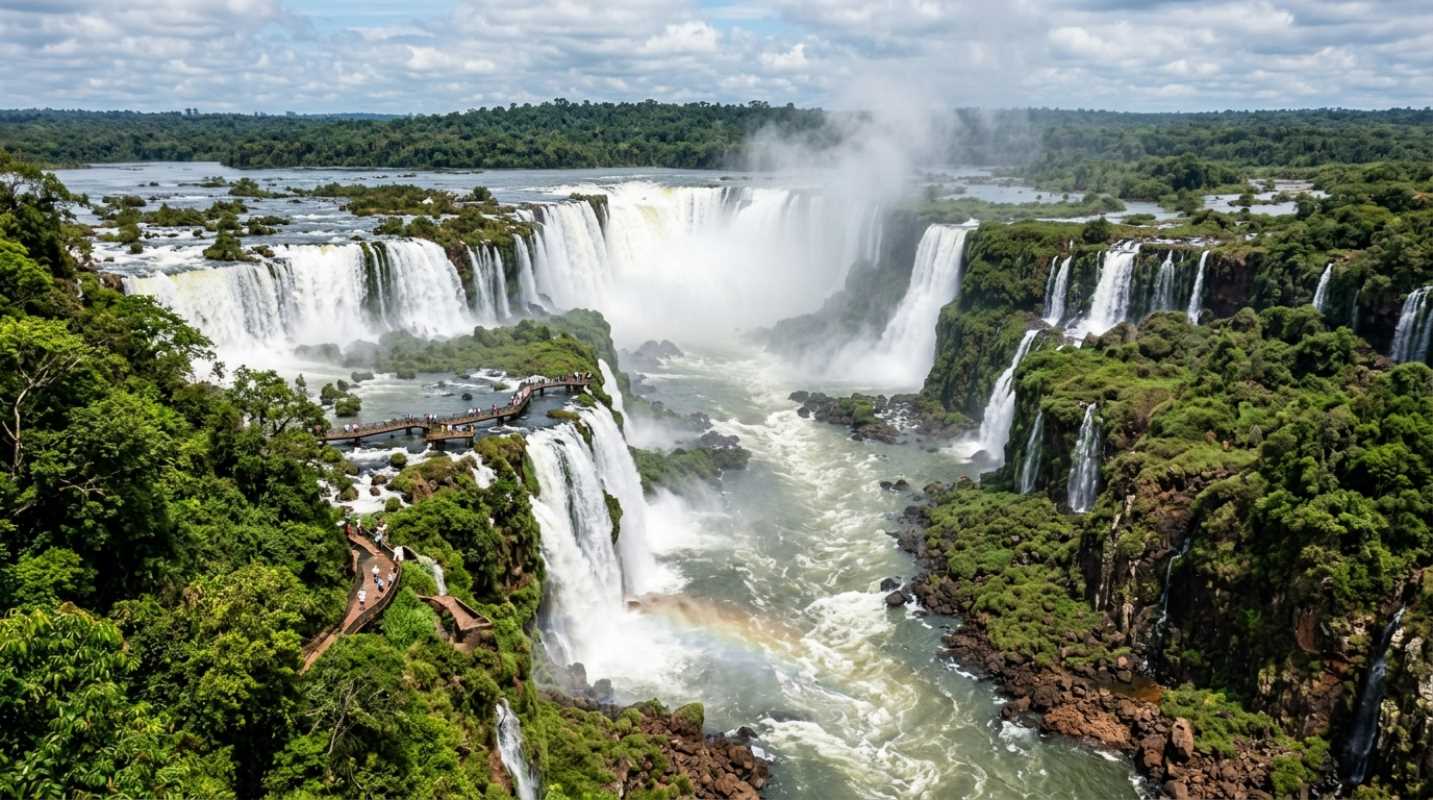
If you want to feel the raw muscle of planet Earth, head to Iguazú. Straddling the border between Argentina and Brazil, this protected Atlantic rainforest cradles a horseshoe-shaped chain of 275 distinct waterfalls.
The sound hits you long before you see the falls, a steady, deep roar echoing through the jungle canopy. Over 1,700 cubic meters of water crash over the cliffs every single second. Clouds of misty spray rise hundreds of feet into the air, creating endless rainbows against the lush green backdrop.
The surrounding rainforest is teeming with life. Bright toucans fly between branches, ring-tailed coatis forage near the walkways, and elusive jaguars roam the deep jungle interior.
To get the complete experience, explore both borders
• The Argentine Side: Offers miles of walkways looping over upper and lower falls, including an elevated bridge that takes you right over the terrifying edge of the Devil's Throat.
• The Brazilian Side: Delivers wide panoramic views of the entire falls system, perfect for photography and taking in the scale of the waterfalls.
• Speedboat Tours: High-speed Zodiac boats take you right into the churning spray below the cataracts for a refreshing soaking.
Tayrona National Park in Colombia Where Jungle Meets the Caribbean
Imagine dense, humid rainforest spilling straight down from the mountains onto golden sand beaches and turquoise Caribbean water. That is Tayrona National Natural Park, located in northern Colombia where the Sierra Nevada mountains meet the sea.
Walking the trails here means navigating giant mossy boulders, crossing suspension bridges, and listening to howler monkeys call through the canopy. You can hike in the morning and cool off with a swim at protected beaches like Cabo San Juan or La Piscina in the afternoon.
Tayrona also carries deep ancestral heritage. It is the sacred territory of four indigenous groups, including the Kogui and Arhuaco. Because of this spiritual connection and the need for ecological recovery, the park shuts down entirely three times every year
• February Closure: Closed from February 1 to February 15 for the spiritual Kugkui Shikasa season.³
• June Closure: Closed from June 1 to June 15 during the Saka Juso period.³
• October Closure: Closed from October 19 to November 2 for the Nabbat season.³
Planning around these scheduled dates make sures you avoid disappointment while respecting the local communities who care for the land.
Here matter practical tips to remember as you build your travel itinerary
• Torres del Paine: Book your trekking permits early and pack reliable windproof layers.
• Galápagos: Bring cash for the airport entry fees and pack reef-safe sunscreen.
• Iguazú: Allocate at least two full days so you can see both the Argentine and Brazilian sides.
• Tayrona: Check the indigenous closure calendar before booking flights into Santa Marta.
Start Your South American Expedition
Visiting South America's protected wild lands will change the way you see the natural world. These parks give you front-row access to ancient evolutionary history, thundering geological forces, and rich biodiversity found nowhere else.
As you travel, always practice leave-no-trace principles, support local indigenous guides, and choose eco-friendly lodging. The wild frontiers of 2026 are waiting for you, so pack your hiking boots and start mapping out your adventure today.
Sources:
1. Torres del Paine National Park Information
https://worldlyadventurer.com/torres-del-paine-national-park/
2. Galapagos National Park Entry Fees
https://www.galapagoslastminute.net/blog/new-entrance-fees-to-the-galapagos-national-park-august-1/
3. Tayrona National Park Closure Dates
https://poporotours.com/en/tayrona-park-closure-dates-2024/